From Typing to Talking: The Evolution of Voice Seach Optimization (VSO)
Do you remember the days of carefully curating a string of keywords to get the search results you needed? You might have typed "Italian restaurant downtown open now" into a desktop computer, hoping the algorithm would decipher your intent.
Search didn’t used to be intuitive. It was a skill you had to learn.
Fast forward to this morning. You likely asked Siri to set an alarm, told Alexa to play your morning playlist, or asked Google, "Where can I find the best coffee near me?" You didn’t think about keywords. You just spoke.
This shift represents a fundamental change in human behavior. We are moving from a world of rigid, text-based queries to one of fluid, natural conversations. For businesses, understanding this transition from traditional SEO to Voice Search Optimization (VSO) isn't just an option; it's a necessity for survival in a voice-first future.
The Journey from Boolean to Natural Language
To understand where we are going, we must look at where we started. Early search engines were literal. They relied on exact keyword matching. If you didn't know the specific terminology, you were often left navigating a maze of irrelevant links. The burden was on the user to speak the computer's language.
Then came the semantic search revolution. Updates like Google’s Hummingbird began to understand the context and intent behind the words. The algorithm started to act less like a librarian referencing an index card and more like a human assistant trying to understand a question.
However, the real catalyst for change was the smartphone. When internet access moved from our desks to our pockets, speed became the priority. Typing on a small glass screen is often cumbersome. Speaking is natural. It is faster (humans can speak about 150 words per minute vs. typing 40) and allows for multitasking.
The Age of the Digital Assistant
We have now entered the era of the smart assistant. This isn't science fiction anymore; it is the furniture in our living rooms and the device in our pockets.
Apple's Siri, Amazon's Alexa, and Google Assistant have normalized talking to machines. Smart displays like the Google Nest Hub have added a visual layer to voice responses, creating a richer experience.
Consider the data:
It is estimated that over 150 million people in the U.S. use voice search assistants.
More than half of all smart speaker owners use their device daily to perform searches.
Voice commerce is expected to rise significantly, with consumers comfortable ordering household goods simply by asking.
These AI-powered devices are learning constantly. They understand accents, colloquialisms, and even follow-up questions. This technological leap has forced a massive pivot in how content is discovered.
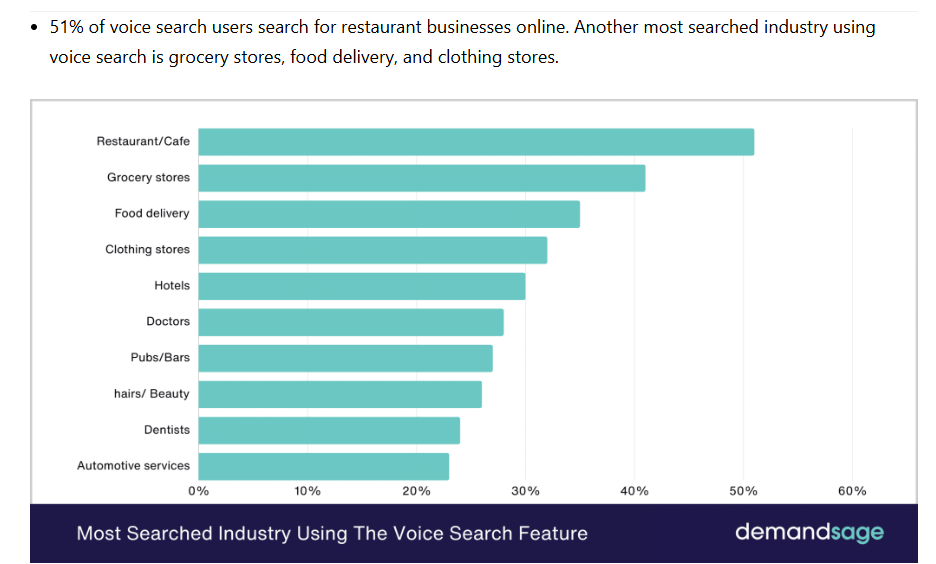
Voice Search Assistant Use cases
Why VSO is Crucial for Modern Business
Why should a business care if someone types or talks? Because the intent and the expectation are different.
When a user engages with voice search, they are typically looking for immediate answers. They are often in the middle of cooking, driving, or walking. This signals high intent. If someone asks, "Where can I buy running shoes near me?", they aren't browsing; they are ready to buy.
If your brand isn't optimized for voice, you are invisible to this high-intent audience. Traditional SEO strategies that focus on short-tail keywords (e.g., "running shoes") often fail in the voice arena. VSO requires a strategy that mirrors human conversation.
VSO vs. Traditional SEO: The Strategic Differences
While traditional SEO and VSO share a foundation, their execution differs significantly. Here is how you need to shift your thinking:
1. Keywords vs. Conversations
Traditional SEO: Focuses on short, punchy keywords like "best marketing agency."
VSO: Focuses on long-tail, conversational phrases. Users speak in full sentences. A voice query looks like, "Who is the best marketing agency for startups in Oakland?"
2. The Battle for "Position Zero"
Traditional SEO: Being on page one is the goal. Being in the top three results is a win.
VSO: There is often only one result. When you ask Alexa a question, she doesn't read you a list of ten websites. She gives you one answer. This makes the "Featured Snippet" or "Position Zero" the ultimate prize. If you aren't the answer, you don't exist.
3. Local Focus
Traditional SEO: Can be broad and global.
VSO: Is hyper-local. "Near me" searches have exploded. Voice search is heavily tied to location data, meaning your Google Business Profile must be immaculate.
Actionable Tips to Adapt for the Voice Era
How do you ensure your brand is the one Alexa chooses to read aloud? Here are strategic steps to refine your approach.
Adopt a Question-Based Strategy
Think about the questions your customers ask during sales calls or support chats. Use tools like Answer the Public to find the specific questions people are asking about your industry.
Action: Create content that directly answers these questions. Ensure the answer is concise (under 30 words) and placed near the top of the page.
Build Robust FAQ Pages
FAQ pages are gold mines for VSO. They naturally follow a Q&A format that aligns perfectly with voice queries.
Action: Structure your FAQs with the question as an H2 or H3 header, followed immediately by a direct, clear answer.
Use Schema Markup
Schema markup is code that you put on your website to help search engines return more informative results for users. It helps the search bots understand the context of your content.
Action: Implement "Speakable" schema markup to identify sections of your content that are best suited for audio playback.
Write for the Ear, Not the Eye
Read your content out loud. Does it sound robotic? If you stumble over a sentence while reading it, a voice assistant will too.
Action: Use simple language. Aim for a Flesch reading-ease score of 60 or higher. Keep sentences short and punchy.
Who is using voice search optimization in Oakland?
The digital landscape is becoming overwhelmed with "sameness." With AI generating vast amounts of content, brands risk drowning in a sea of generic noise. At LAB415, we believe the antidote to this is humanity, and nothing is more human than the voice.
We are not just watching this technological shift; we are helping our clients navigate it. We understand that VSO is not just about technical tweaks. It is about understanding the psychology of your customer. What are they asking? How are they asking it? And most importantly, why?
LAB415 helps companies move beyond basic keywords. We develop comprehensive content strategies that capture the conversational nature of modern search. From optimizing for "Position Zero" to structuring data for AI assistants, we ensure your brand remains audible in a crowded room.
The way we search has changed forever. The question is, is your brand part of the conversation?